






















Informational
OEM vs Aftermarket Appliance Parts: Which Should You Buy?
Nov
OEM vs Aftermarket Appliance Parts: Which Should You Buy?
Trying to decide between OEM and aftermarket parts? Here’s the complete breakdown on cost, quality, warranty, and when each makes sense – from experts who see both sides every day.
What Are OEM Parts?
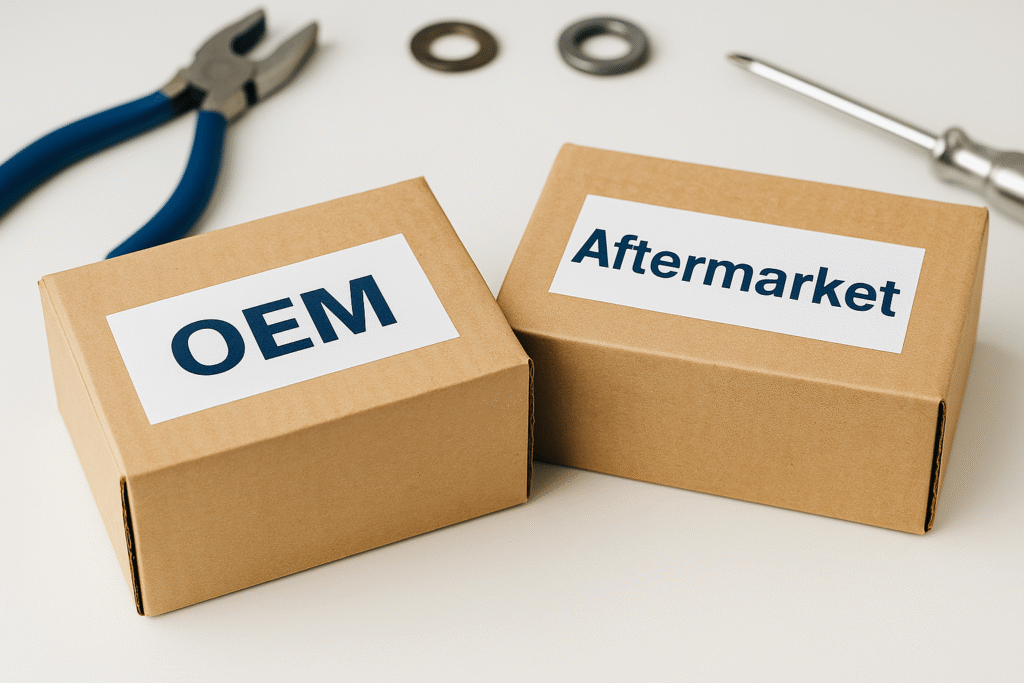
OEM (Original Equipment Manufacturer) parts are built by, or for, the same company that produced your appliance. They’re identical to the part you’re replacing – same design, same materials, same factory tolerances.
When you order an OEM control board for a GE refrigerator, for example, you’re getting the same board GE installed at the factory. That means perfect fit, plug-and-play wiring, and the manufacturer’s own warranty coverage.
What Are Aftermarket Parts?
Aftermarket parts are made by third-party manufacturers that replicate or redesign OEM components. They often cost less and are widely available, but the quality varies by maker.
Some aftermarket brands produce excellent replacements that meet or exceed OEM performance; others cut corners. The trick is knowing which supplier you can trust.
Side-by-Side Comparison
| Feature | OEM Parts | Aftermarket Parts |
|---|---|---|
| Manufacturer | Original brand (LG, GE, Whirlpool etc.) | Independent company |
| Fit & Compatibility | Exact fit every time | Usually compatible; confirm before buying |
| Quality Control | Factory-tested and certified | Varies – depends on brand & materials |
| Warranty | OEM 90-365 days | 30-180 days typical |
| Price | Higher (cost of precision & branding) | Lower (great for budget repairs) |
| Availability | Sometimes limited for older models | Often readily available online |
When to Choose OEM Parts
- Safety-critical or electronic components – boards, thermostats, sensors.
- Appliances under warranty – OEM parts keep your manufacturer warranty intact.
- High-value equipment – built-in fridges, premium washers, or commercial units.
Think of OEM as the “set it and forget it” option. It costs more up front but prevents repeat breakdowns later.
When to Choose Aftermarket Parts
- Older appliances where OEM parts are discontinued.
- Simple mechanical components like knobs, filters, belts, or hoses.
- Budget-sensitive repairs or temporary fixes.
Aftermarket is ideal when function matters more than brand perfection – like a dryer lint screen or a dishwasher rack wheel.
Real-World Example: Dryer Heating Element
Your electric dryer stops heating. You find two elements online:
- OEM element – $85, brand-name.
- Aftermarket element – $45, generic fit.
Both will likely fix the issue. The OEM version uses thicker nichrome coils that last longer; the aftermarket version costs half as much but may burn out sooner. If you use your dryer daily, OEM wins. If you’re fixing a rental unit, aftermarket might be the smarter spend.
How to Spot High-Quality Aftermarket Parts
- Check reviews – real buyer photos reveal quality fast.
- Look for warranty length – good aftermarket brands stand behind their work.
- Compare materials – avoid plastic where OEM used metal.
- Buy from trusted sources – like RepairPartsZone, where every part is tested for compatibility.
Price vs Value: Do the Math
Let’s say an OEM door gasket costs $90 and lasts 5 years. An aftermarket one costs $45 and lasts 2 years. Over 10 years, the OEM version actually saves you $45 and two replacement cycles. Sometimes paying more saves more.
Environmental Impact
Using OEM parts reduces waste because they last longer. But buying locally made aftermarket parts can lower carbon shipping costs. Either way, repairing instead of replacing an appliance keeps hundreds of pounds of waste out of landfills – and that’s the real win.
Warranty & Returns: Know Before You Buy
Always confirm:
- Warranty duration and who honors it (manufacturer vs retailer).
- Return policy window and restocking fees.
- Defect replacement procedure.
RepairPartsZone’s return policy is simple – if a part doesn’t fit or fails under normal use, we’ll replace or refund it.
FAQs
Are aftermarket parts safe?
Yes – from reputable sources. Safety concerns only arise with untested, unbranded imports lacking UL or CSA markings.
Will aftermarket parts void my warranty?
Possibly. If your appliance is still under manufacturer warranty, stick with OEM. For older models, you’re free to mix & match.
Why are OEM parts more expensive?
You’re paying for guaranteed fit, factory testing, and brand accountability. The markup buys peace of mind.
Do aftermarket parts last as long?
Some do – especially when produced by reputable suppliers. Always check warranty and user reviews.
Final Thoughts
There’s no single right answer – only the right balance for your budget and appliance. OEM parts bring long-term reliability; aftermarket parts deliver affordability and convenience. Knowing when to use each is what separates a smart repair from an expensive mistake.
